(Founder Stories) Dennis Crowley: "The Hard Part Is Building The Machine That Builds The Product"

Erick Schonfeld

Erick Schonfeld is a technology journalist and the executive producer of DEMO. He is also a partner at bMuse, a product incubator in New York City. Schonfeld is the former Editor in Chief of TechCrunch. At TechCrunch, he oversaw the editorial content of the site, helped to program the Disrupt conferences and CrunchUps, produced TCTV shows, and wrote daily... → Learn More

Thursday, March 3rd, 2011

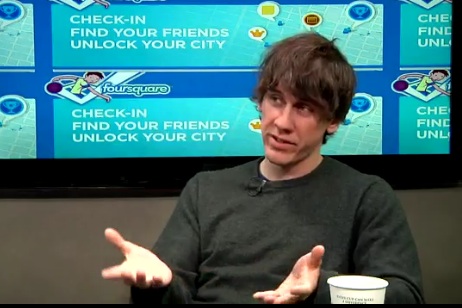
What’s the hardest part of building a hot startup? In Part II of his Founder Stories interview, Foursquare CEO Dennis Crowley tells Chris Dixon it’s not building the product, it’s building the company that builds the product. The product is easy. Crowley and his team have been thinking about the product for years. “The hard part is building the machine that builds the product,” he says.

Foursquare has grown from 2 to 50 people, moved into bigger offices, and had to build a backend system that can support millions of users. But all of that was behind the scenes. “This is our year to build all the stuff we have been thinking about,” he declares.

Dixon starts off this clip asking why Crowley decided to build Foursquare in New York City instead of Silicon Valley Moving to California was simply never on “the roadmap.” Crowley also thinks “the product is better because it is in New York. San Francisco can feel very early-adopterish.” And while New York users can also be faddish, “not everyone works in technology,” so startups can get a more diverse set of early users. Crowley credits Google’s efforts to build a New York City presence with 2,000 engineers as an inflection point in the city’s startup eco-system because it attracted a lot of the right types of engineers (focused on the consumer Internet instead of Wall Street).

Crowley also discusses how he thinks about fundraising and acquisition offers. It’s all about getting the company in the best position to build the product. “We have these things in our head and we just want to get them built,” he says. “We are trying to make the moves that put the company in the best position to do what we want to do.” Why is Foursquare going it alone? “We just ultimately decided we should continue working on this,” he explains, “because the kernel of what we are doing is different than everything else that is out there. So we should ride this as far as we can and see where we can take it.”

Watch the whole interview in the video clip above and Part I and Part III. (You also can subscribe to Founder Stories on iTunes)

Company: foursquare
Website: foursquare.com
Launch Date: April 16, 2013
Funding: $112M

Foursquare is a geographical location based social network that incorporates gaming elements. Users share their location with friends by “checking in” via a smartphone app or by text message. Points are awarded for checking in at various venues. Users can connect their Foursquare accounts to their Twitter and Facebook accounts, which can update when a check in is registered. By checking in a certain number of times, or in different locations, users can collect virtual badges. In addition, users...

→ Learn more

Dennis Crowley is a co-founder of Foursquare. Previously, he co-founded Dodgeball, a network of the same nature which sold to Google in 2005. He has been named one of the “Top 35 Innovators Under 35” by MIT’s Technology Review magazine (2005) and has won the “Fast Money” bonus round on the TV game show Family Feud (2009). His work has appeared in The New York Times, The Wall Street Journal, Wired, Time Magazine, Newsweek, MTV, Slashdot and NBC. He is...

→ Learn more

Chris Dixon is a Partner at and co-founder of Founder Collective. He is also a contributing writer for TechCrunch. He previously was the CEO and Co-founder of SiteAdvisor, which was acquired by McAfee, and Hunch, which was acquired by eBay. In addition to his work with Founder’s Collective, Chris is a personal investor in early-stage technology companies, including Skype, TrialPay, DocVerse, Invite Media, Gerson Lehrman Group, ScanScout, OMGPOP, BillShrink, Oddcast, Panjiva, Knewton, and a handful of other startups that...

→ Learn more