Google has made some significant changes to its service level agreement (SLA) for Google Apps, removing the clause that allows for scheduled downtime. Previously, Google had a clause that included the right for downtime due to maintenance. The new version of the SLA has been amended to eliminate maintenance windows in the agreement. So any unscheduled and now scheduled downtime-will count towards downtime in the Google Apps SLA. If Google drops below 99.9 percent uptime for the month, Google Apps users will receive a credit.
Google has also changed its agreement to count ANY intermittent downtime. Previously, a period of less than ten minutes was not counted as downtime. And before that, Google Apps could be unavailable for more than 21 hours on a given day, and the company could still claim they had 100% uptime.
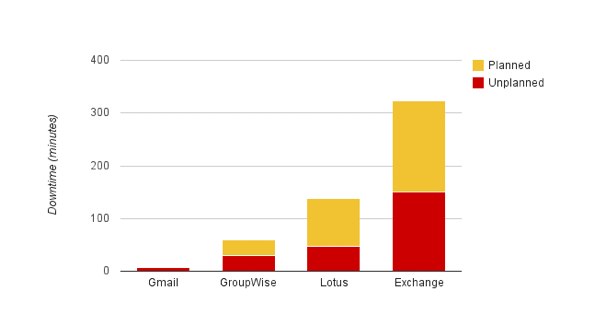
In addition, Google is once again claiming 99.984 percent uptime for Gmail in 2010 (in 2008 Gmail also has 99 percent uptime). Google says that 99.984 percent uptime “translates to seven minutes of downtime per month over the last year.”
The company is also claiming that it had the least amount of downtime in 2010 compared to its competitors. Google’s decision to credit Google Apps customers for downtime is significant, considering that many cloud providers don’t provide this within their SLAs.