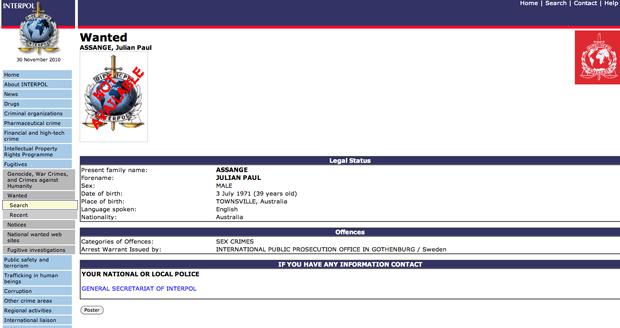
Two days after Internet whistleblower WikiLeaks released 251,287 U.S. diplomatic cables to major media organizations including the New York Times and Der Spiegel, international police organization Interpol has placed founder Julian Assange on its wanted list for “Sex Crimes,” in a warrant issued by the Public Prosecution Office in Gothenburg, Sweden.
While Assange might be facing criminal charges if he returns to his native Australia and is under investigation in the US for espionage, the Interpol mediated charges here are in connection with rape allegations made by two different Swedish women back in August.
While Interpol makes it clear that its infamous Red Notice list does not function as an international arrest warrant, it does serve the purpose of broadcasting internationally that the person in question is a fugitive and can aide in extradition process.
Assange, who has previously denied the allegations, is rumored to currently be hiding in the United Kingdom, which as of yet has not shown any signs of taking legal action. The @wikileaks Twitter account has remained dormant since news about the release went out.