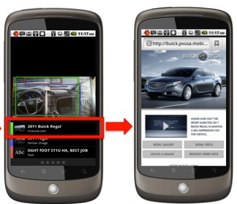
 Google Goggles, the search giant’s mobile visual search technology, is getting a new test case: advertisements. Google is working with a number of high-profile brands, including Buick, Disney, Diageo, T-Mobile and Delta Airlines to offer “Goggles-enabled” print ads.
When users take pictures of these individual ads with Google Goggles on their Android or iPhone, they will be able to click to a mobile website from the brand.
The advertisements are similar to scanning a QR Code and receiving further information about a product. I wonder how many people will actually be interested in unlocking the information via Goggles without an incentive like a deal or coupon associated with the ad.
Of course, there are a number or interesting use cases Google could turn on for Goggles that involve advertisements or discounts. For example, Google could allow users to take pictures of products in stores to access a coupon.