
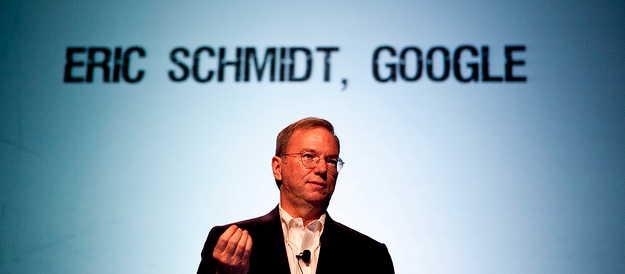
Earlier today, Google announced their Q3 earnings. And they were good. Really good. But that doesn’t mean that questions still don’t linger about the company going forward. Namely, how are they going to make money off of something besides text-based search advertising?
Google’S position is that they already are. Today they shared three key numbers to show how well three other areas of their business are doing: YouTube, display ads, and mobile. And mobile came up again later during the Q&A session on the call. Google CEO Eric Schmidt was on the call and took the question about how Android will make money for the company.
Schmidt called Android “probably the largest single platform play in the market today.” And going forward, he thinks that’s only going to increase as more and more people buy smartphones. At the same time, “in the open source approach, that means we give the software away, which is always paradoxical. People say, well how do you make money from that?,” Schmidt was quick to jump to.
“The evidence we have is that people who use Android search twice as much as everything else,” Schmidt continued. “So, clearly, there is more revenue associated with those searches.”
One of the specific numbers shared by Google SVP of Product Management, Jonathan Rosenberg, was that the annualized run rate on mobile for Google is now one billion dollars. But it’s important to note that this is across all platforms and devices. That just means that a lot of people are searching on their phones and seeing ads.
That’s exactly what Google wants, but Android is a bit different since they’re pouring so many resources into it. “If they are using Android systems, revenue that we share in the search are shared with operators but not with anybody else. So, again it’s more lucrative,” Schmidt noted.
Schmidt also said that on that basis alone, Android is already “hugely profitable.” And he continued on to say that Android is likely to be financially successful even without any of the other mobile ideas that are possible. “We can layer on value-added services,” he said.
That’s interesting. It suggests that Google is definitely thinking about ways they can layer premium services on top of the platform in order to make money. At the very least, they haven’t ruled it out. What kinds of services? Who knows. One obvious one would be turn-by-turn navigation, but they’re already giving that away for free.
But Schmidt was quick to jump back to, “Our primary purpose right now is building this open platform.” He also stated that the goal with their app store is to make money for developers, not themselves.