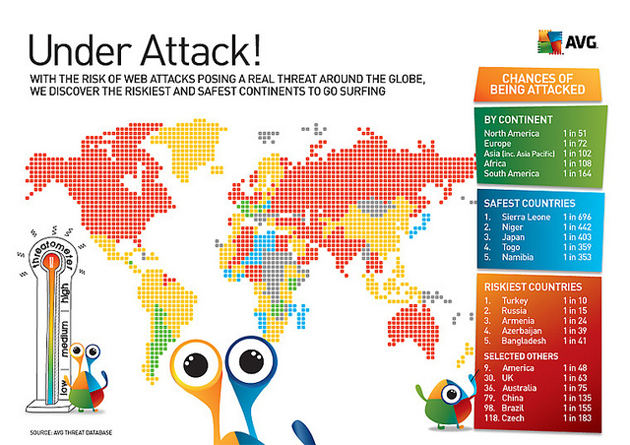
 According to a study just released by security company AVG, Internet users in Russia and Turkey have the greatest chance of being attacked by viruses, with the average chance of a web surfer falling prey to an attack being at one in 10 and and one in 15, respectively.
The security company looked at virus vulnerability in 100+ million PCs in 144 countries during the last week of July of this year. The United States (with one user in 48 being attacked) came in 9th place, the United Kingdom came in 30th with one in 63, Australia was 36th with one in 75 users being at risk.
Sierra Leone, Niger, and Japan lead at the other of the spectrum with a one out of 696, one out of 442, and one out of 404 attack ratio, respectively being the safest of all countries studied.
Most likely, Japan takes high billing in terms of web surfing safety because of a high proportion of Internet users in the general population (78.2%), coupled with widespread broadband access. The African nations of Sierra Leone and Niger appear highly for the opposite reason, with low broadband penetration and Internet use making frequency of virus attacks neglible.
According to the study, users in the high risk Caucasus region (Turkey, Russia, Armenia and Azerbaijan) were hands down more vulnerable to attack, most likely because of higher frequency of accessing illegal download sites, as well as the continuing popularity of Internet cafes.
Remember Internet cafes?
Image: AVG