 Yesterday, Robert Scoble wrote a post about “Foursquare’s Yelp problem.” It’s an interesting read, with some good thoughts about how Foursquare can withstand feature-copying from a much larger rival. He asked for my thoughts, so I figured I’d jot some down here. Most importantly, his post got me thinking about the next phase of location, which I think we’re just about to enter.
First, Scoble’s thought that Foursquare might be in trouble because Yelp copied its check-in badge idea seems a bit premature to me. It was a much bigger deal when they added the whole check-in concept back in January, but the fact that Foursquare has started growing faster than ever since that point shows they have an advantage over Yelp in the realm. That advantage is that they have a social graph built for location, Yelp does not (yet).
As we all know, Yelp was built as a rating and review system for local restaurants. It has a social graph, but most people on it are connected to other people because they’re interested in their food/restaurant reviews. It has nothing to do with wanting to see which of their real friends are nearby (which is what Foursquare is all about). That’s why I think it would have been smarter for Yelp to partner with Foursquare (or Gowalla, or Loopt, etc) in the same way a service like Hot Potato has (using APIs). Yelp + Foursquare would have been a formidable power play in the location space. Instead, Yelp’s check-in offering is still pretty weak, while Foursquare’s is still pretty small.
Scoble also mentions that it might be wise for Foursquare to buy another service to bolster its offering. That’s not a bad idea, especially when they close that round of funding they’re working on. Scoble specifically menions Foodspotting — a service I like a lot — and that makes a lot of sense. But it may be wiser to think beyond that (or buy Foodspotting and extend their services). Foursquare needs a way to upload pictures and make comments on check-ins (and pictures). Basically, they need to copy the functionality Gowalla has right now. There’s always a fine line between keeping a service simple and cluttering it up with feature creep, but Gowalla’s mixture of check-ins, comments, and pictures is pretty damn perfect in my view right now.
 Another idea Scoble brings up is a “check-out.” I love this. He talks about it from customer loyalty perspective, which is a good point, but I think it goes beyond that. One problem I have with Foursquare is that it’s too often populated with inaccurate (old) information. That is, I may go somewhere check-in when I get there, but 30 minutes later I’m gone. Someone who shows up 15 minutes after that (after seeing my check-in on Foursquare) will have missed me. This happens quite a bit. Sadly, the only way to “check-out” of a venue is to check-in to another one. That’s no good.
The problem with a check-out is that it’s total feature-creep. And I would bet that only a small percentage of those that check-in would ever explicitly check-out too — it’s simply asking users to do too much. That leads me to my main point. I think we’re on the verge of location services getting even more interesting thanks largely to one thing: iOS 4.
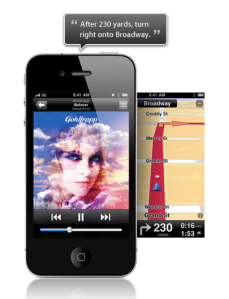
Apple’s new mobile operating system (formerly known as iPhone OS 4), which is launching in about a week, brings with it the ability for third-party applications to run in the background for the first time. One of the allowed functions is background location. Here’s how I see this working with Foursquare: you go to a venue, you load up Foursquare and check-in. The app then stays open in the background for a set period of time, notes when your location changes, and checks you out of the venue when you move far enough away.
Obviously, this would auto check-out would need to be opt-in, but it seems like the perfect initial use of the new iOS with background location. The next step is the auto check-in — but that’s a bit more complicated, and I think users may not be ready for it yet. Still, it would be a cool option to have. The app could track you location in the background and if you stop at some place for long enough, it could ask you if you’d like to check-in there.
By now, you Android fanboys have probably already left several comments along the lines of “but Android has been able to run location in the background for 2 years.” That’s true, but let’s be honest: it’s the iPhone that’s going to help this type of activity take off (just as it was the iPhone that helped background location take off in the first place). Foursquare, Gowalla, Loopt, etc still see the vast majority of their activity on the iPhone. Android may be able to extend upon these new location ideas, but it will be the iPhone that puts them in the mind of most consumers.
And this is just the most basic functionality made possible by the new iOS. I bet we see a new range of location service pop-up this year thanks to the background location-functionality. And I still bet that a lot of those companies get snatched up by the bigger players looking to compete. And the location turf wars will heat up even more.