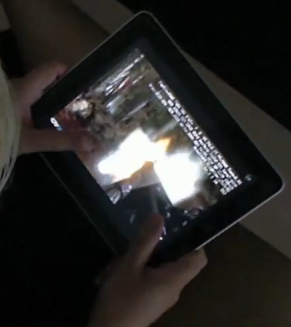
 Earlier this evening, as early adopters across the country started getting acquainted with their iPads, a very interesting (albeit short) video landed in our inbox: Crysis running on the just-released device. We’ve embedded the video below.
No, Apple hasn’t secretly packed a state-of-the-art desktop graphics card into the groundbreaking device. We’re told the game is running on OTOY, a service that uses extremely fast computers in the cloud to handle the game’s graphics rendering and then streams the output to your computer via the web (which means your computer, or in this case, iPad, needs a relatively small amount of processing power to run the game).
In some senses, this isn’t terribly novel — last summer, we posted a video showcasing Crysis and Grand Theft Auto 4 running on a Samsung Omnia, and OTOY competitor OnLive has shown similar demos in the past. But games running on those small form factors have always seemed like impractical tech demos. This iPad footage, on the other hand, shows that the device has plenty of screen real estate to make gaming feasible. That said, there are still many questions about this cloud-based gaming model.
We’ve reached out to OTOY for more details (and hopefully more footage).