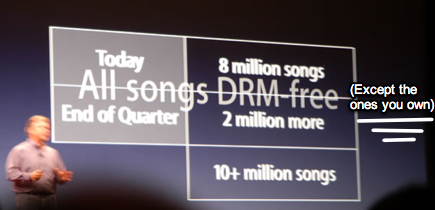
Nearly two years ago, Steve Jobs published an open letter to the music industry calling for the death of DRM (digital rights management). He convinced EMI to ditch DRM back in April, 2007, but the three other major music labels held out. Until today. Now all the songs on iTunes are DRM-free, or soon will be.
And, with that, the DRM era of digital music finally can be put to rest. (Amazon’s MP3 store has been selling DRM-free tracks from all the major labels for a year now already). The labels were likely holding out for other concessions from Apple, such as variable pricing (which they got), and the Apple also thankfully convinced them to sell songs over cellular data networks to iPhones for the same price as they could get them on their computers.
But it looks like the labels prevailed in sticking it to consumers on one last point. Anyone who wants to upgrade their entire existing iTunes Library to DRM-free versions of the same songs, can conveniently do so with one click. But it is going to cost you 30 cents a track to do so. That’s right, you have to pay again for songs you already bought. Let’s see, 6 billion songs X 30 cents = $1.8 billion in potential upgrade fees. That’s a music tax, plain and simple. No wonder the music companies finally relented.
It still won’t save them.