
Psolenoid, a new startup launching today in public beta, is looking to help blogs connect with each other more effectively by offering an enhanced form of the popular trackback feature found on most blogs. The service generates attractive links that appear at the bottom of a post, each with a brief summary and thumbnail to help readers determine if the linked blog is worth reading.
While similar functionality can be found using standard trackbacks and pingbacks, Psolenoid founder Ethan Gahng says that these are prone to spam and are also not supported on some popular blogs like Live Journal. Psolenoid verifies its links through a central server, so it can automatically monitor for spammy links, and is also compatible with most blog sites that don’t otherwise support trackbacks.
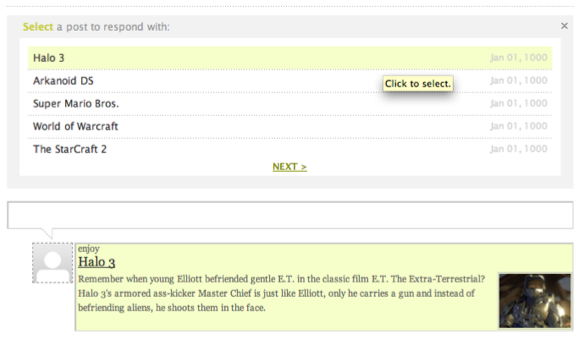
Creating a ‘rabbit-hole’ between blogs is simple. If you stumble across a blog with a post relevant to one on your own site, you simply enter the URL of your site into the Psolenoid form in the comments section of their post (assuming they have Psolenoid installed). Psolenoid will automatically pull in a feed of the most recent posts from your blog, from which you can choose one, along with a thumbnail and brief summary. After pairing the two posts, Psolenoid will automatically insert links at the bottom of both of them without any intervention from the owner of the blog you’ve discovered (they can delete entries later through the service’s control panel if they’d like). See the video below for a demonstration of the process.
Psolenoid offers two install options: if you’re comfortable giving the service the administrator password to your blog, it can automatically install itself in a matter of seconds. More security-conscious users can also install the blog by adding a small snippet of Javascript to their site.
The biggest obstacles Psolenoid will face will lie in getting people to use it in the first place – there is little point in using Psolenoid if you can’t find any other blogs that have it installed (it’s a classic chicken-and-the-egg problem). That said, the install process is easy enough that the service could easily go viral, especially if it pops up on a large blog that users frequently link to.
http://vimeo.com/moogaloop.swf?clip_id=2420400&server=vimeo.com&show_title=1&show_byline=0&show_portrait=0&color=c9ff23&fullscreen=1
Psolenoid from psolenoid on Vimeo